Before leaving Lithuania we stopped at the Samuel Bak Museum and Ponevezh Yeshiva. The
pairing could not have been more perfect.
At the Museum, we learned Bak was recognized early on for his prodigious artistry and that
after surviving the Holocaust he became an influential painter and writer.
In Panevezys, a city 140 km north of Vilnius, we learned how the eponymous yeshiva was
founded by Rabbi Yitzchak Yaakov Rabinovich and later led by Rabbi Shlomo Kahaneman, how
the institution’s commitment to tracking pupils altered pedagogy within formal Jewish education,
and how the yeshiva grew — despite horror — exponentially.
Inside the Bak Museum were selections of the artist’s works, often beside videos of him
recounting personal episodes.
Inside the Bak Museum were selections of the artist’s works, often beside videos of him
recounting personal episodes.
In Panevezys, we saw two buildings: the first, where the yeshiva began; the second, where the
yeshiva relocated prior to the war.
Despite altering styles and relocating throughout his life, Bak frequently returns, within his
pieces, to the ghetto.
There, in the Vilnius ghetto, elders saw Bak’s abilities; materials at the time were hard to come
by in the ghetto, yet the space was a cultural beacon, we were told. In 1942, poets Abraham
Sutzkever and Shmaryahu Kaczerginski gave Bak the community’s 19th century pinkas
(register) and encouraged the nine-year-old to paint whatever came to mind atop the antiquated
pages.
Less an act of defilement than a relentless push for creation, the transfer guaranteed a future.
“In this book I had to leave my testimony and save the book from destruction,” Bak was reported
as saying. “Poets believed that the book had more chances to survive than people through
whose hands it passed.”
Inside the pinkas/Bak’s sketchbook are juxtaposed records of Jewish life: beside beautifully
composed lines of residents’ names are images of a dancing couple. Other pages have similar
pairings of rich calligraphy and child-drawn cartoons.
The yeshiva’s second building in Panevezys was merely a temporary home. When war broke
out, Kahaneman was in British Mandate Palestine. He opted to remain and run the yeshiva from
afar. In 1941, with Kahaneman still in pre-state Israel, the Nazis came to Panevezys. Nearly
every student and teacher — many of whom the rosh yeshiva (dean) had personally recruited
— was killed, we were told.
In 1944, bearing the same name and leader, Ponevezh Yeshiva reopened in Bnei Brak. Today,
the institution has nearly 3,000 students.
The current museum and former yeshiva marked our final stops before arriving in Riga, Latvia.
Back in Lithuania there’s no shortage of Jewish history. The lessons lead us forward.
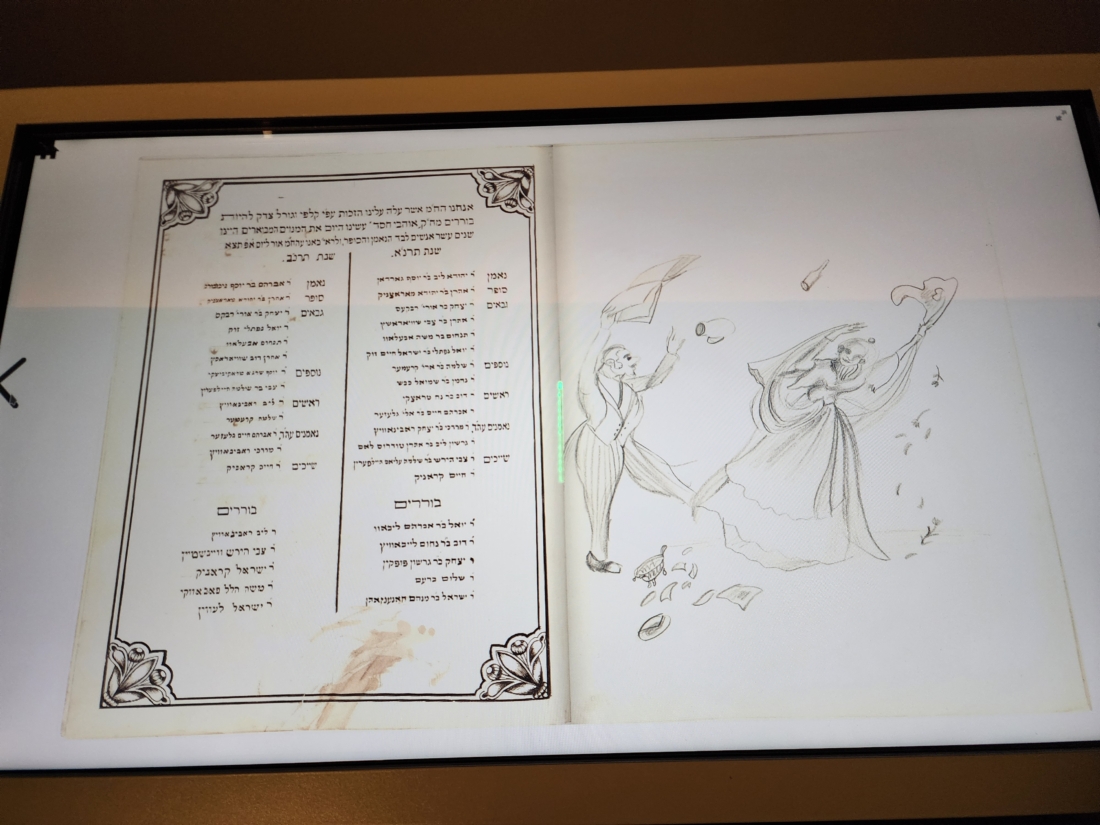
Sharing pages within the Vilnius pinkas (register) are names and drawings. Photo by Adam Reinherz
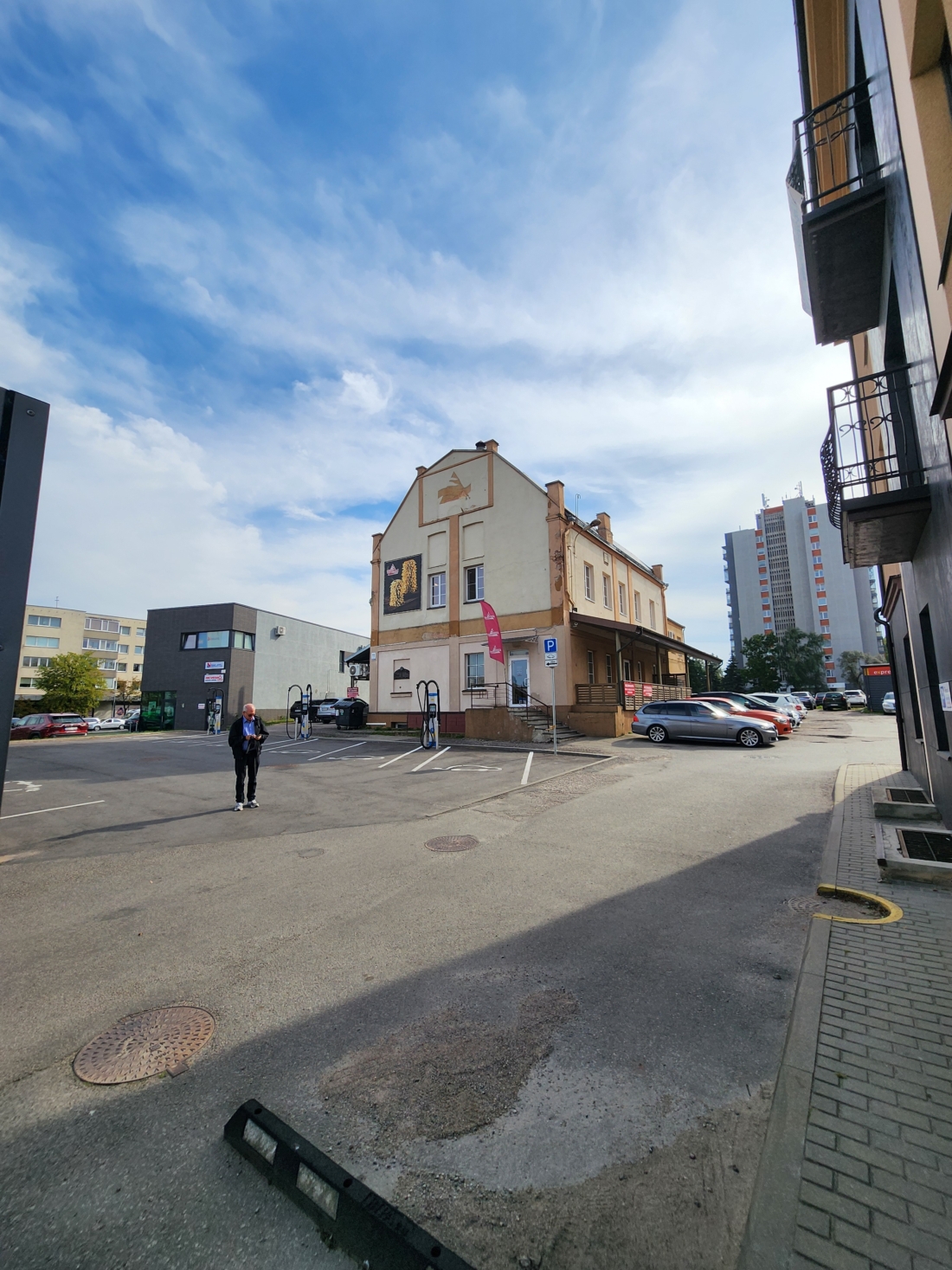
A building formerly housing the Ponevezh Yeshiva. Photo by Adam Reinherz