NN Theatre – the name stands for “No Name” Theatre.
On the bus I shared that I’ve been thinking a lot about the role the performing arts, especially theater, can play in sharing these stories and touching the hearts and minds of audience members.
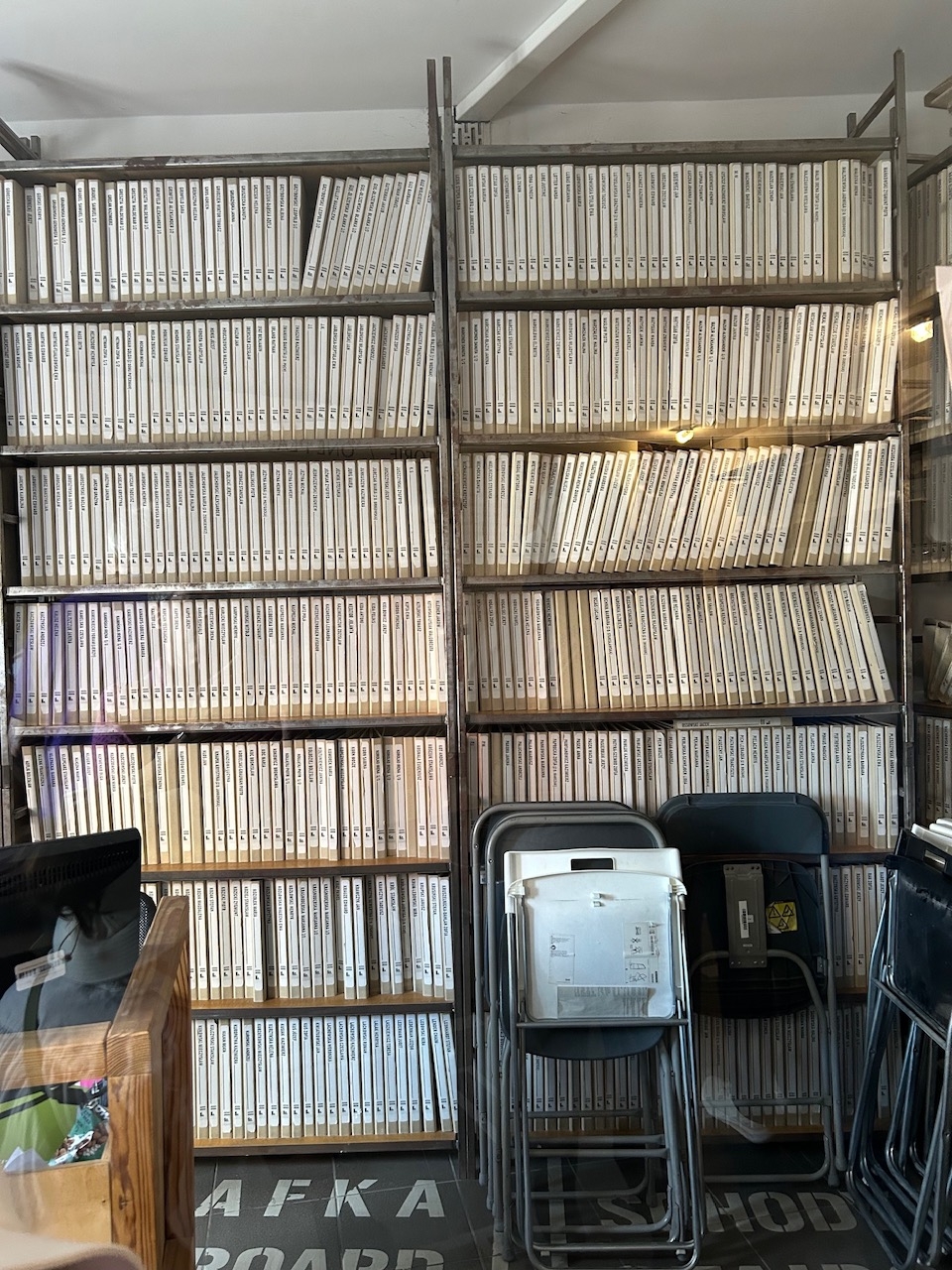
NN Theatre is engaged in that project in multiple ways. The exhibit – with its thousands of folders and binders attempting to document the city’s buildings and each and every one of its Jewish inhabitants – enacts both the process of holding memory, and the terrible loss inflicted on Lublin (many of the folders are empty or contain fragmentary information).
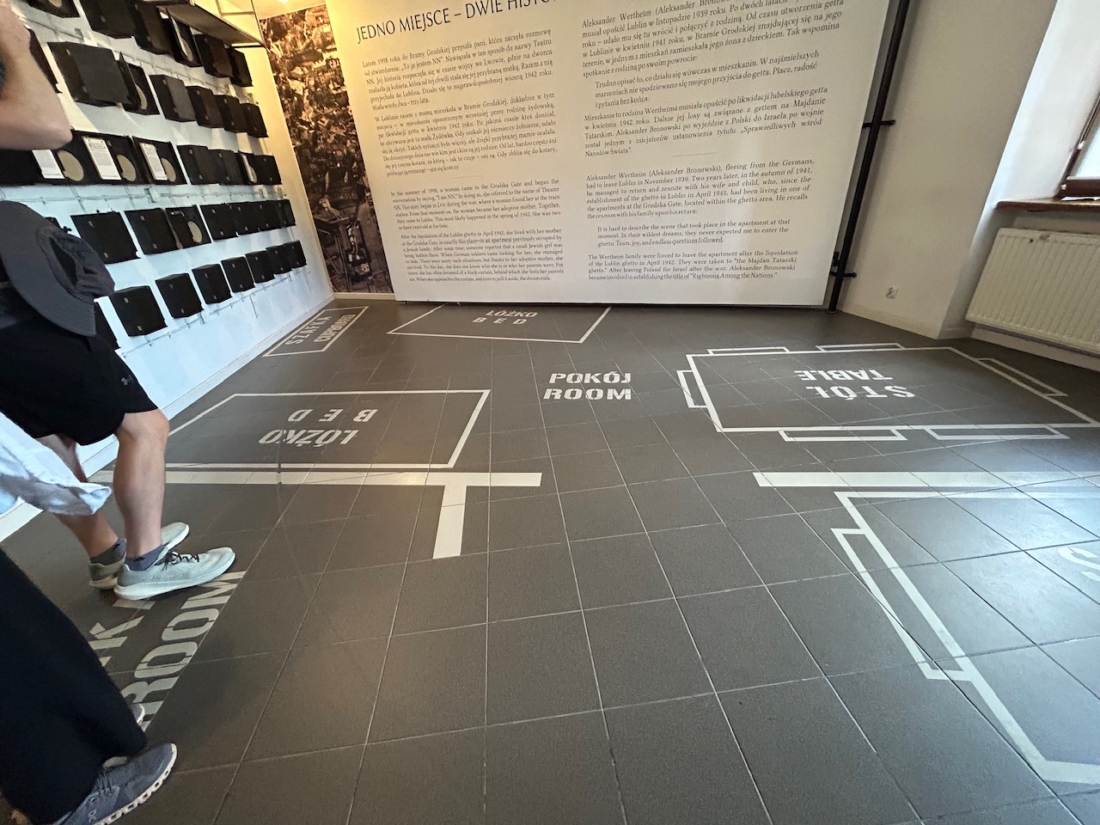
The rooms, with the floor plan painted on the floor, feel a bit like a rehearsal room in which the set has been taped out on the floor by a stage manager for the actors to learn their blocking – except here, instead of serving as a guide for a future enactment, the floor plan remains as a trace of past tragedy.
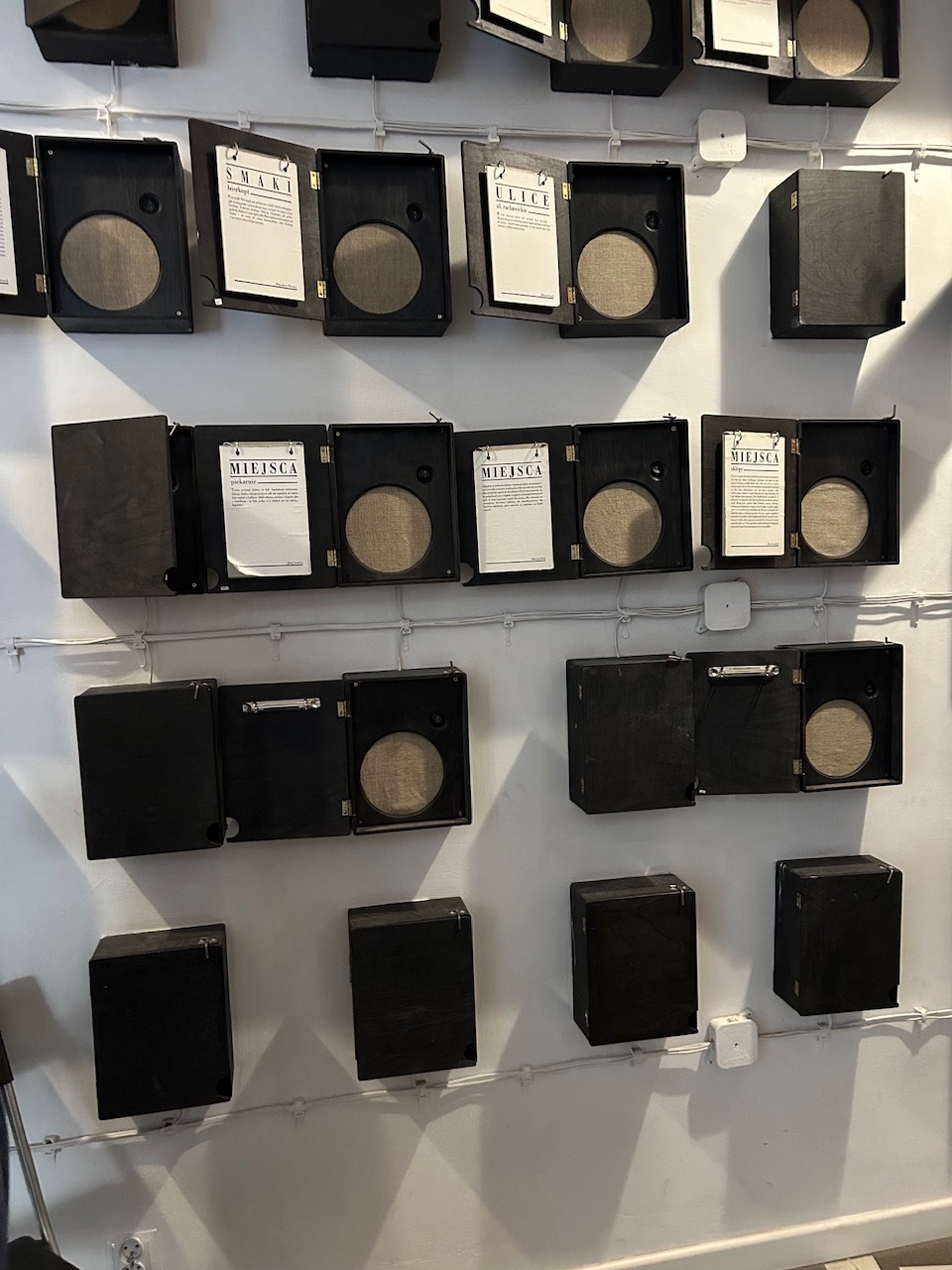
The collected oral history provides a chorus of stories, allowing witnesses and survivors to speak their history directly to visitors.
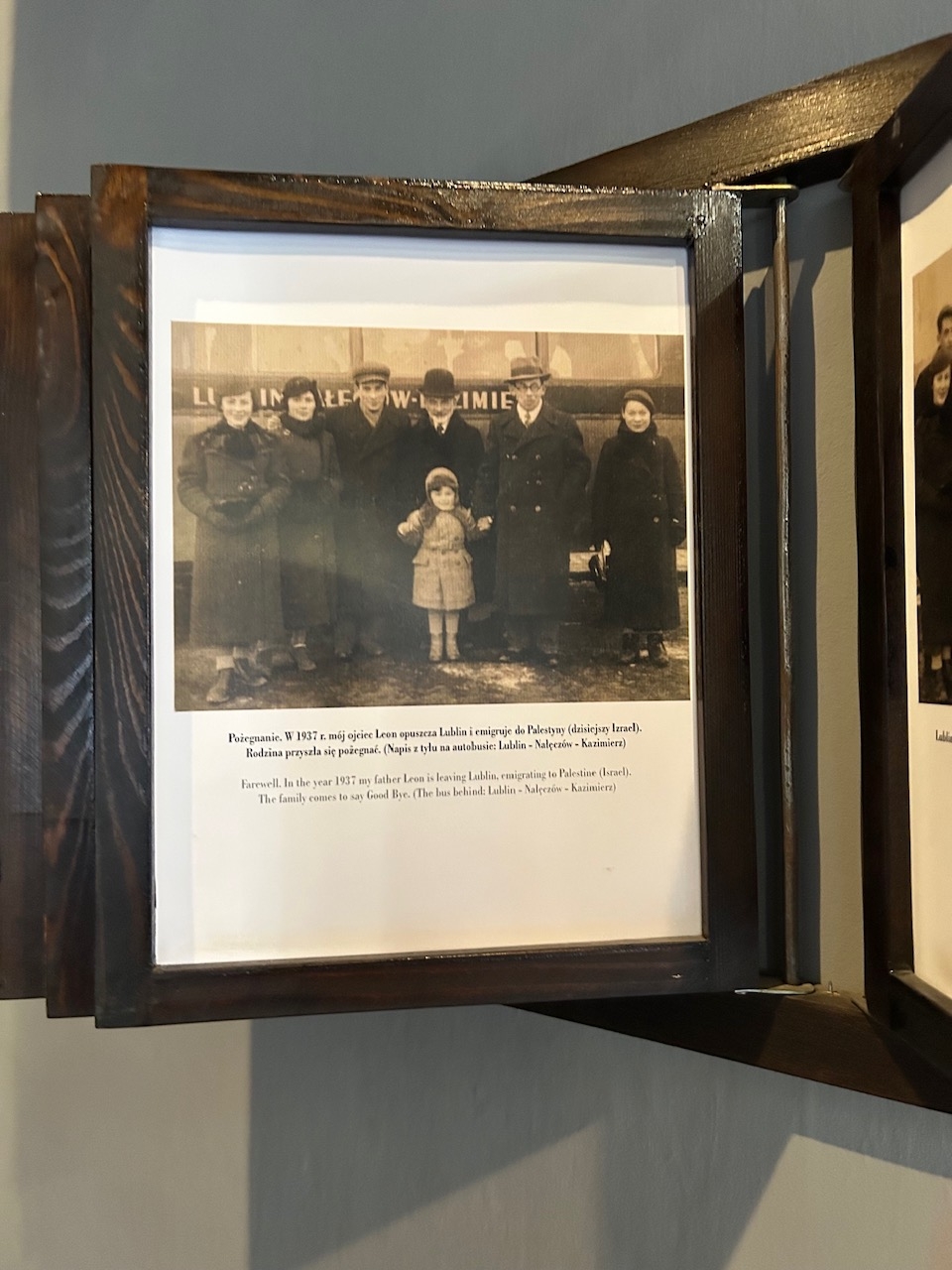
The nearly 3000 photographs lining the walls invite us to consider the strangers they depict in their full humanity – people who married, went on picnics, showed off their new clothing, relaxed with their dogs. These are the people the German Nazis humiliated, demeaned, starved, tortured, turned into “cargo,” and liquidated.
Our guide told us that twenty of the people in photographs had been recognized and identified by visitors to the exhibit. That feels miraculous: the world is simultaneously so large and yet can be so small.
In addition to their archival work, the theater also creates plays from the records and performs in schools around the region, keeping Lublin’s Jewish history alive. This, in a city that currently has a Jewish population of less than fifty.