Every time I teach my Europe after 1945 class, there comes the time when I talk about the wars in former Yugoslavia during the 1990s. I always show a short CNN report about the massacre in Srebrenica in July 1995. In the video, students see men being marched to a forest, forced to lay down – machine guns are fired, but initially the shooters don’t actually aim at the bodies of their victims. After scaring them, they have them stand up again, walk them deeper into the wood, where they finally kill them. CNN spares its viewers the footage of the actual murder, but it was shown on Serbian TV at the time. 8000 men were killed. Genocide had returned to Europe, 50 years after the end of the Nazi dictatorship.
While our bus was driving to Zbylitowska Gora I could not stop thinking about what murder by bullets means and how many victims of the Holocaust lost their lives in mass shootings. Half the victims were shot in face-to-face killings, often in an endless chain of murder, after waiting for hours, knowing that their turn would inevitably come. Victims and perpetrators were together throughout the whole process, and triggers were pulled time and time again, one single brutal murder after the other. One of the reasons for the establishment of death camps and gas chambers was to reduce the psychological toll of these intimate killings on the killers.
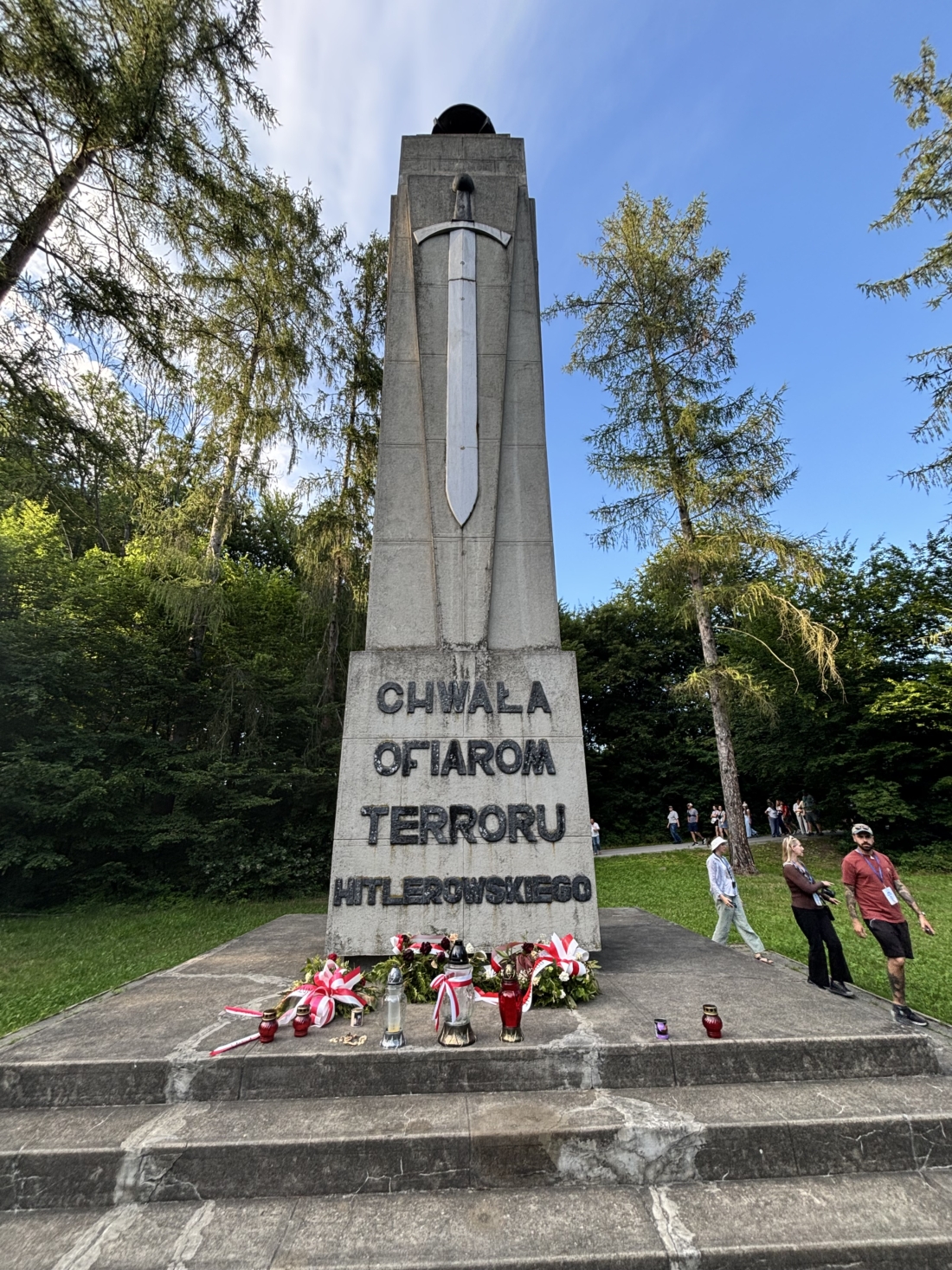
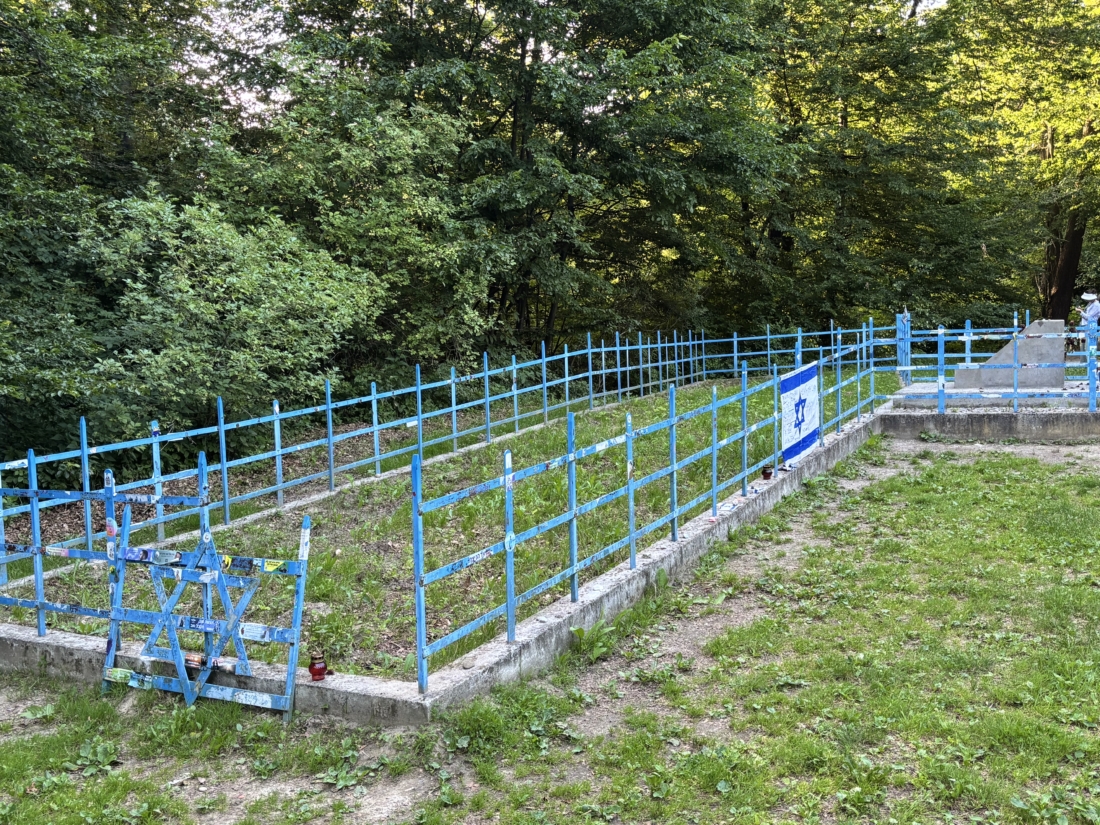
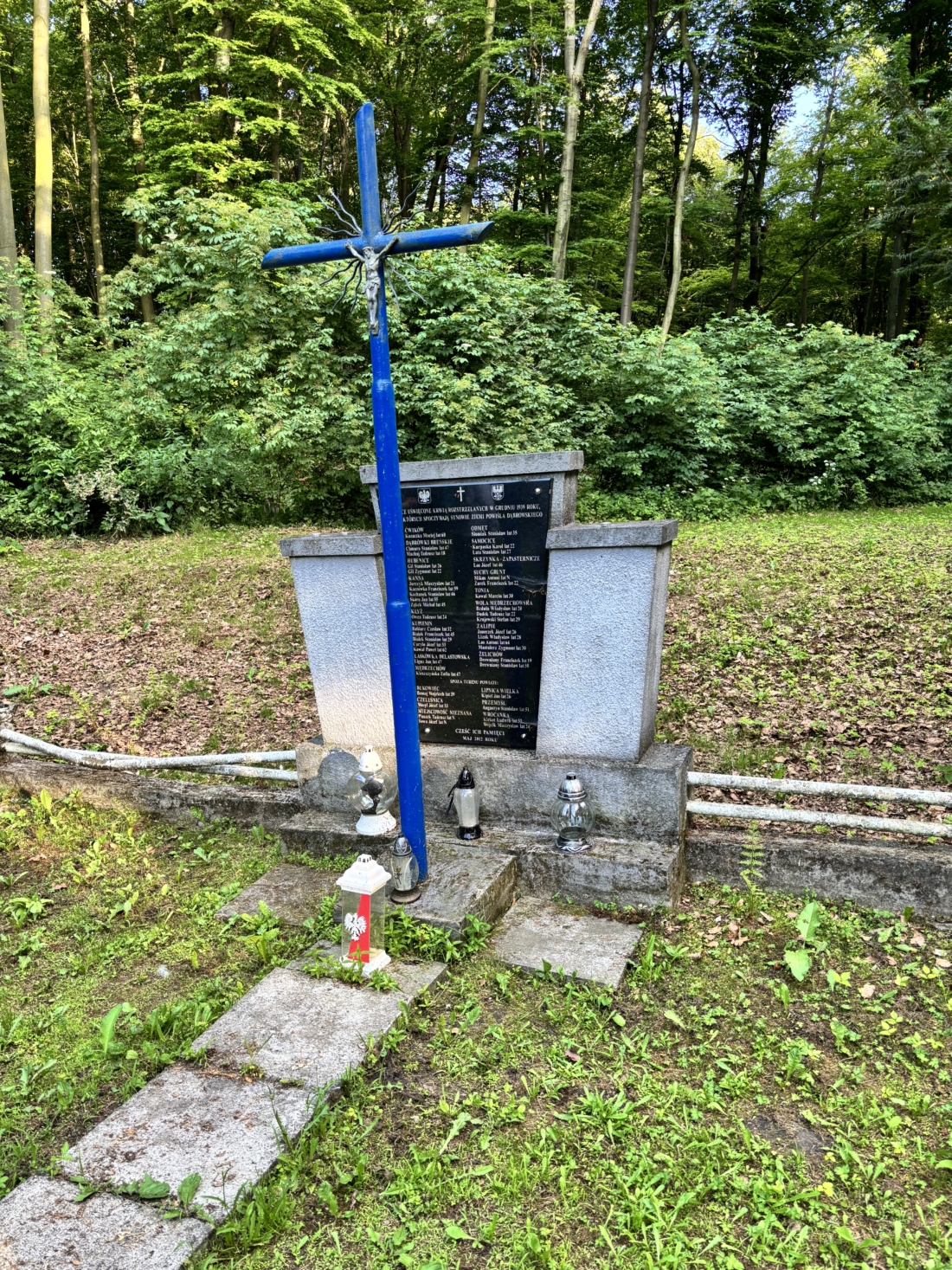
I did not like the look of the main monument at the site – the huge pillar with over-dimensional swords felt inappropriate to the place and what had happened there. What made our visit special to me was the music played by Sarah Miller from our group – a beautiful violin tune that moved me deeply while I was walking between the graves.
“Never again” is the simple message of all Holocaust memorials. Yet the mass shootings in Bosnia during the 1990s, the events in Rwanda at almost the same time, and much more recent mass killings like the brutal murder of tens of thousands of people in El Fasher, Sudan, in October last year, remind me that genocide is not a thing of the past but has a terrible presence. While we are saying “Never again” we must remember that we also need to say “Stop it now” when we are confronted with antisemitism, racial hatred, and brutality beyond imagination. We have not been able to end genocide, and we need to do more to confront it.