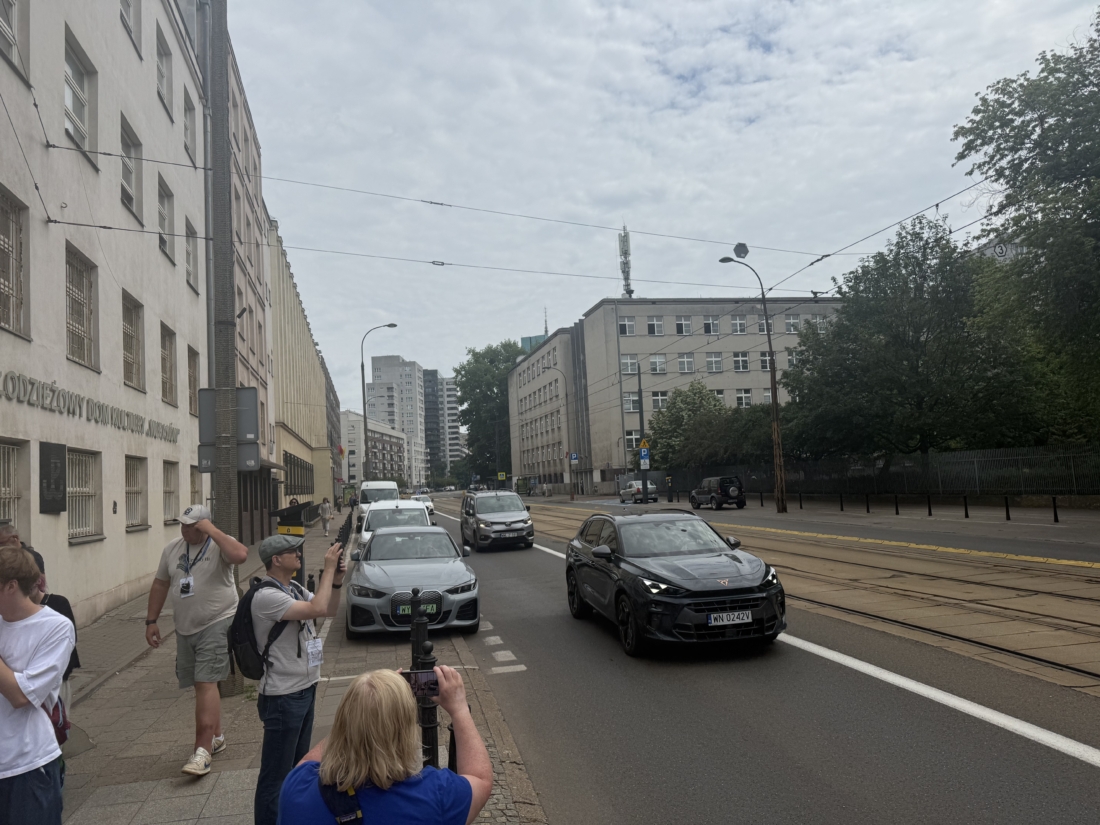
As we toured the land where the Warsaw Ghetto once stood, we began the memorial walk. Navigating from one section of the ghetto wall, we walked back to the main road, and had a view of a fairly stereotypical European street.
Avi began explaining that in 1942, the Nazi’s erected a wooden wall between the two buildings (below you will see an image of them— the building on the left was a hospital, the building on the right was a school). This wall denoted the Umschlagplatz or “collection point,” where Jews from the Warsaw Ghetto were forcibly corralled by the Nazi’s before being deported to Treblinka. Adjacent to the staging area was a rail line, meaning Jews at the Umschlagplatz could see their fate. In 1942 alone, over 250,000 Jews passed through this staging area. This is one piece of Operation Reinhardt.
It is hard to put into words the weight felt at this location. Avi shared one story that I feel provided a view into the lives of Jews in Nazi-occupied Poland. He shared that in one instance a woman was attempting to buy milk for her baby, and this mother was outside of the ghetto without a permit. When asked about the permit, she responded that it was just back at her house and she could go grab it quickly and provide the documentation to the Nazi officers they were not interested. Ultimately, two soldiers grabbed her and attempted to place her in an already full wagon of other Jews who were being transported to the Umschlagplatz. As she was being dragged towards the wagon, she fought off the two Nazi officers, and attempted to return to her young child.
Crying out for her baby, for milk, for help, this mother used all of her strength to fight for her baby, to simply feed her child.
In response, additional Nazi officers jumped on top of her to stop her from escaping, throwing her like a sack into the wagon as expressed by a Jewish onlooker. He described her howls as “animalistic” as she knew she was being taken from her child forever, and to her death.
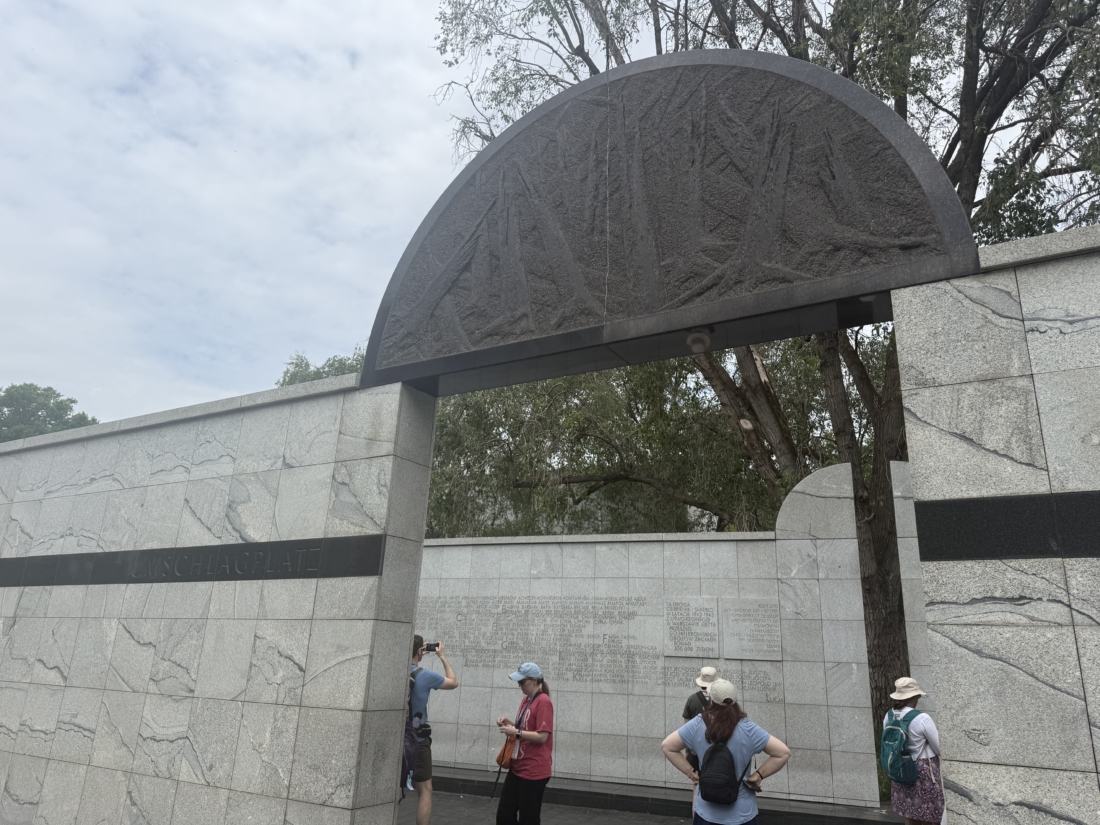
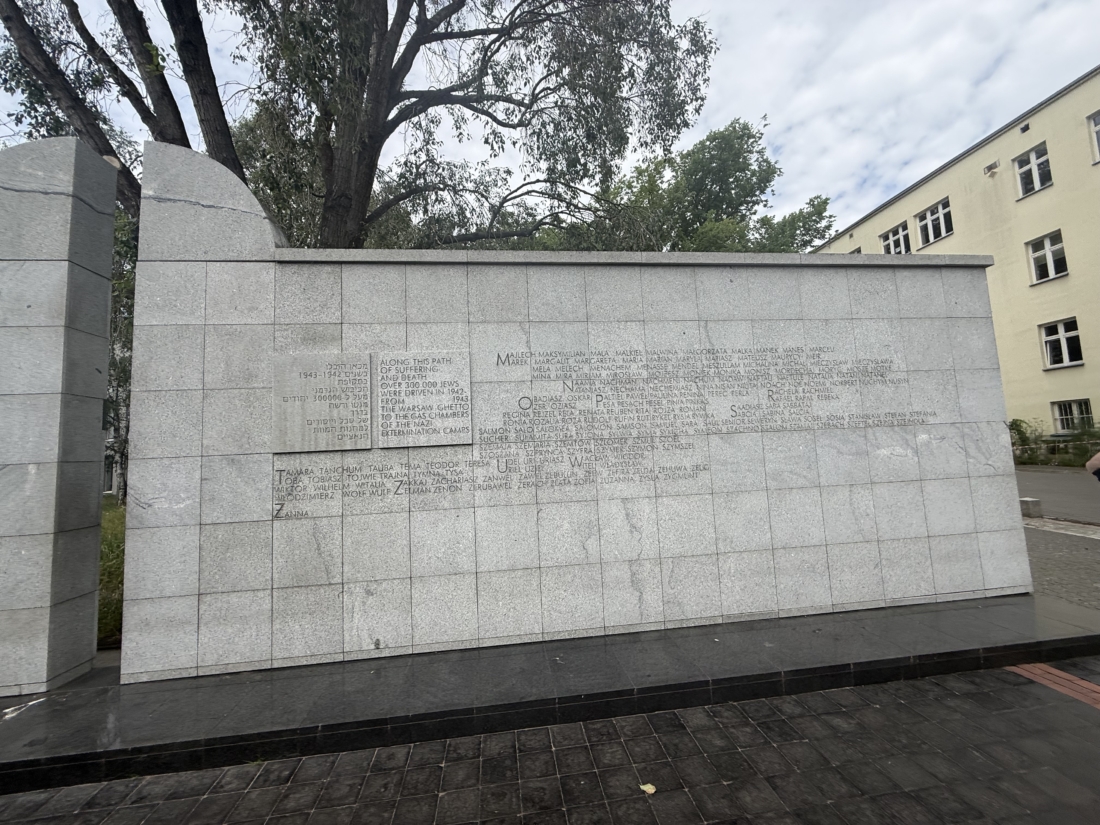
Contemporarily, the buildings were rebuilt in a similar form as they were before the Second World War. Where the train cars used to be now stands the Umschlagplatz Monument. The monument lists alphabetically all Jewish first names with the idea being that this would honor every person who passed through on their way to Treblinka. The memorial is shaped in a way to symbolize the open freight doors on the trains.
Continuing to walk through Warsaw, we then transitioned our conversation to acts of resistance.