
In the smallest of communities we saw life. At their synagogue, in their JCC and across their
city, Tallinners are creating a Jewish future. This pursuit, which Estonians exhibited, is evidence
that a new period in Baltic Jewish life is underway.
Tallinn’s Jewish story stretches to the 15th century, but its modern presence began closer to
200 years ago when cantonists (former soldiers) created a synagogue. Since then, Estonia has
largely been controlled by Germany and Russia. Significant periods of horror and devastation
have followed; yet, now in year 34 of its second republic, there’s hope for continued autonomy,
our guide David, a fifth generation Estonian, told us.
David spoke to us for days. He often took us along hilly cobblestone roads and pointed to
fortified walls, government buildings and places of worship.
“I’m not teaching,” he said. “I’m just sharing what I have.”
At several points we stopped and admired vistas Instagrammers crave. Standing near a ledge,
as a social meda maven posed nearby, we heard about Swedish influences and the Soviet
occupation, and how because Tallinn was one of the sites of the 1980 Olympics, the city ended
up receiving some modernizations, like a new hotel and paved roads.
The Baltics sites we’ve seen are steeped in history — so is Tallinn, but the takeaway, so many
people told us during our time in Estonia, is what’s to come.
This community is like the shofar, Rabbi Shmuel told us. “It started out narrow but step-by-step,
it’s growing.”
Inside the synagogue where Rabbi Shmuel officiates are symbols of promise. The congregation
possesses multiple Torah scrolls. A pomegranate motif — signaling beauty, fullness and the
entirety of Jewish life — adorns the walls. Rising above the pulpit is a retractable skylight.
As we observed the modern space, Mordechai, an octogenarian, tidied the room. He pressed
plush seats up against their backs, opened and closed the ark, and cleaned nearby areas.
“We are a small but active community,” he said.
This year there’ve been two weddings, 4 or 5 circumcisions, he estimated, and several bar and
bat mitzvahs. Tallinn has a kosher store, and on Fridays about 100 challahs are made within the
synagogue for Shabbat.
Adjacent to the synagogue is the JCC. Staff and community members awaited our arrival. More
than merely sharing their bios, they told us their dream and the mechanisms for materialization.
Lay leaders, politicians and Jewish professionals — nearly all of whom are under the age of 45
— have committed to growing Estonian Jewry by focusing on its youth.
Speaking both about their own children and other local youngsters, representatives expressed
pride in telling us about the city’s Jewish kindergarten and how teens and children come to the
JCC throughout the week, and before Shabbat and the holidays, to socialize and learn.
“They understand they are Jews,” we were told about the city’s young. “This is a place to create
and express Jewish identity.”
Among 1.3 million Estonians, about 2,000 are Jewish. Each week, between 30-45 teens arrive
at the JCC for regular programming. Before the holidays, the number jumps to 150-200.
Teens largely speak Estonian, Russian and English — depending on their roots.
“It’s important that we are not an isolated community — that we’re open and welcoming,” we
were told. “We’re trying to expand.”
Staff and leaders repeatedly mentioned their commitment to “informal education,” to working
with mental health professionals, and to “being there” for teens at all times, especially after Oct.
7.
If a pattern develops and a teen doesn’t return for programming, JCC staff — of which there are
less than a handful — check in with the individual to ensure everything is alright, we were told.
Experiences at the JCC are meant to promote Jewish education, staff said, but also to impart an
understanding of life and “how to lead.”
Seated in a circle alongside staff and communal representatives, we heard how Tallinn’s Jewish
leaders grew up in Estonia, participated in local Jewish programming and are now relentlessly
cultivating a new generation.
“It’s important to invest in youth,” we were told. “It’s how you create a sustainable community.”
Make no mistake, we heard, Tallinn is tiny. In the wider Jewish world, some see it as an
afterthought.
What a shame. How do you grow a garden without planting seeds?
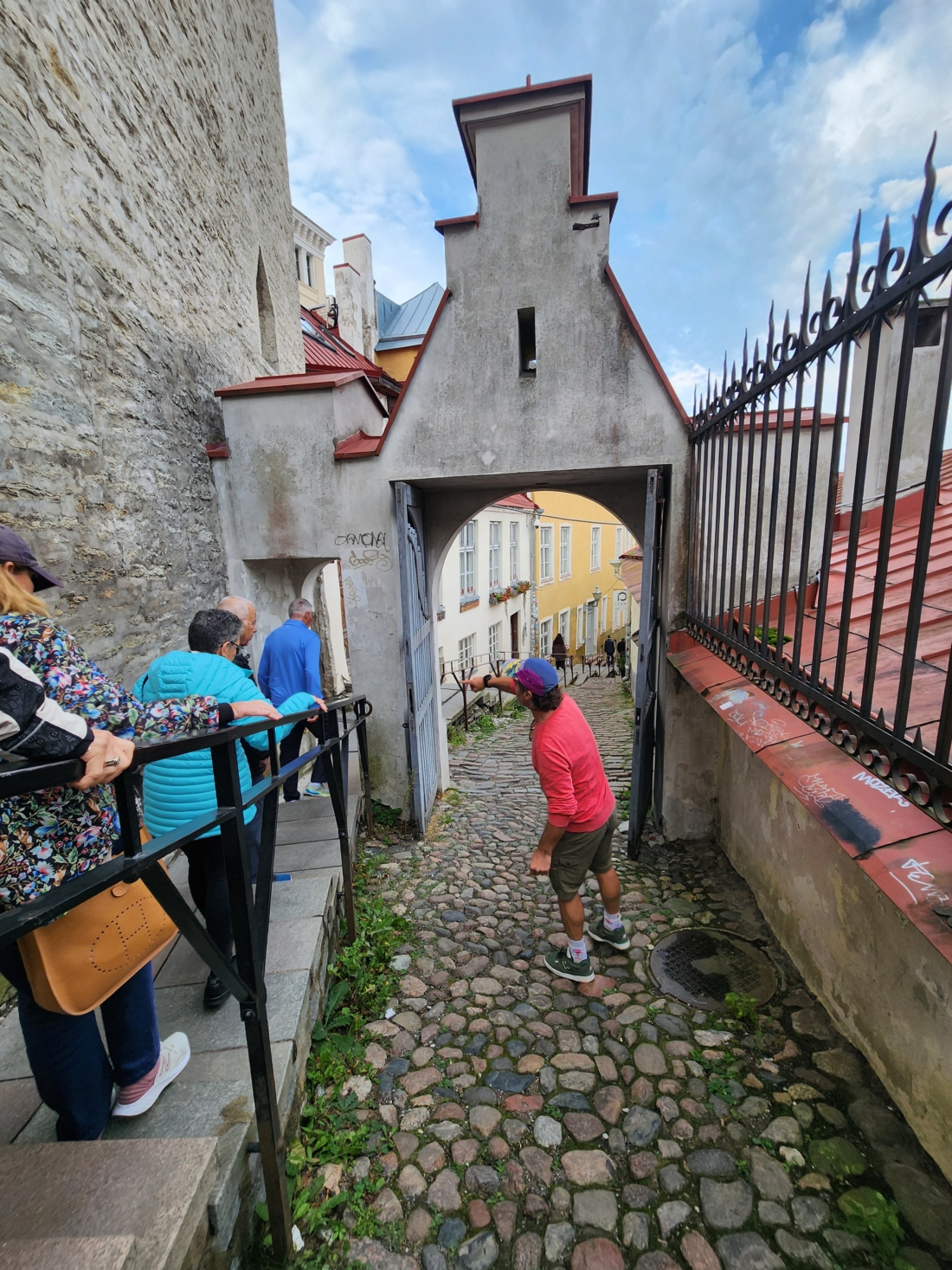
David, our guide, points out local history during a walk through Tallinn. Photo by Adam Reinherz
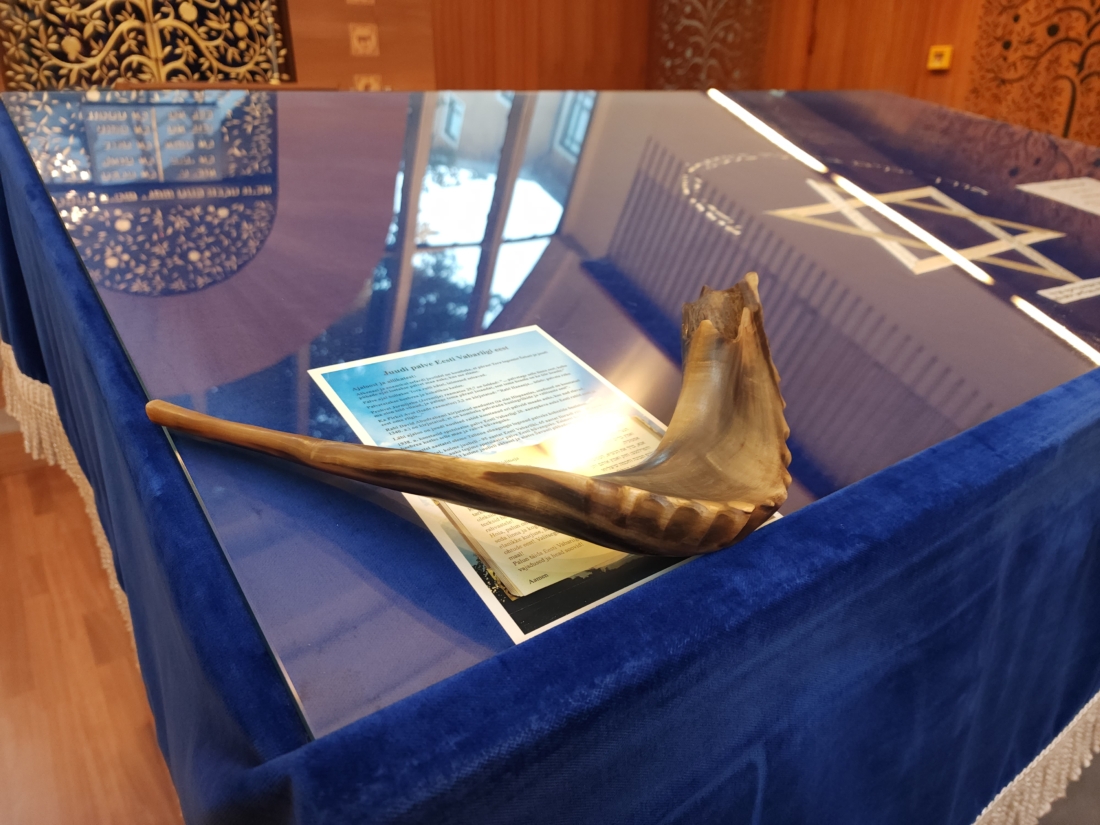
A recently blown shofar rests inside Tallinn’s synagogue. Photo by Adam Reinherz