Restoring the Context of Life: A Teacher’s Journey Through Poland’s Living History- By Travis Lear
For the past ten years, I have stood before my eighth-grade Language Arts classes at the Sarasota School of Arts and Sciences, attempting to bridge the gap between our sunny Florida coast and the darkest chapters of human history. Year after year, my students and I open Elie Wiesel’s Night. We dissect his words, analyze his syntax, and confront the profound silence that followed the Shoah. Yet, as any educator knows, teaching the Holocaust through a single, devastating text risks flattening a millennium of vibrant culture into a single, tragic end. We risk teaching our students how Europe’s Jews died, without ever showing them how they lived. It was this precise challenge that brought me to Warsaw.
Thanks to a humbling nomination by a former student and her parents, I was granted the opportunity to join the Classrooms Without Borders cohort, a journey designed to transform historical text into firsthand, teaching perspective. My goal was to find the tangible, lived realities behind the literature. I found exactly that inside the POLIN Museum of the History of Polish Jews.
Built on the physical site of the former Warsaw Ghetto, the museum’s stunning, fractured architecture serves as a monument not just to a tragedy, but to a thousand years of continuous Jewish life. To truly understand the catastrophe that Wiesel chronicles, one must first understand the rich, complex civilization that preceded it. The POLIN Museum provides this vital context by challenging us to re-examine Jewish history long before the twentieth century, beginning with a simple, ancient legend that defined a homeland.
Po-lin: The Divine Invitation and the Paradox of Privilege
The narrative journey begins not with industrialized hatred, but with a forest and a whisper of hope that is illustrated in the first installment of the museum with the depiction of an ancient folktale. According to Jewish folklore, early refugees fleeing intense persecution in Western Europe during the Middle Ages arrived in the dense Polish woodlands. There, they heard a bird call out, or looked at Hebrew scriptures that seemed to read Po-lin (a phrase translating to “Here you shall rest” or “Here we dwell.”) This linguistic coincidence was interpreted as divine providence. Poland was not merely a temporary shelter; it was an intentional home where Jewish culture could take root and flurish.
This poetic beginning quickly materialized into legal and economic reality. In 1264, Prince Bolesław the Pious issued the Statute of Kalisz, a groundbreaking document that granted Jews unprecedented religious, judicial, and economic freedoms. Later, in the fourteenth century, King Casimir the Great extended these rights, actively welcoming Jewish merchants, bankers, and artisans to stimulate trade in a developing kingdom.
However, this royal benevolence created a complex societal paradox. Because the Jews received direct protection from the monarchy and the high nobility (magnates), they were legally designated as “servants of the royal treasury.” This unique political position became a double-edged sword. To the emerging Catholic and Protestant merchant classes, the Jewish population was perceived as an elite-backed group exempt from local civic authorities. This socio-economic friction stoked early flames of antisemitism, as local populations often directed their frustrations with the crown toward the protected Jewish minority. At this point, if you are still reading you are asking why so many details and snippets of information? I promise there is a reason.
Autonomy, Isolation, and the Brutal Shift of the Partitions
For centuries, Polish Jews maintained a deeply rooted presence without ever fully integrating into mainstream Polish society. This was largely due to a remarkable system of self-governance. From 1580 to 1764, the Council of Four Lands functioned as a central authority for Polish Jewry, regulating everything from taxes to religious education. Jews operated their own courts, spoke Yiddish and Hebrew, and maintained an autonomous cultural ecosystem. They lived side-by-side with their Christian neighbors, sharing commerce but maintaining distinct, separate lives.
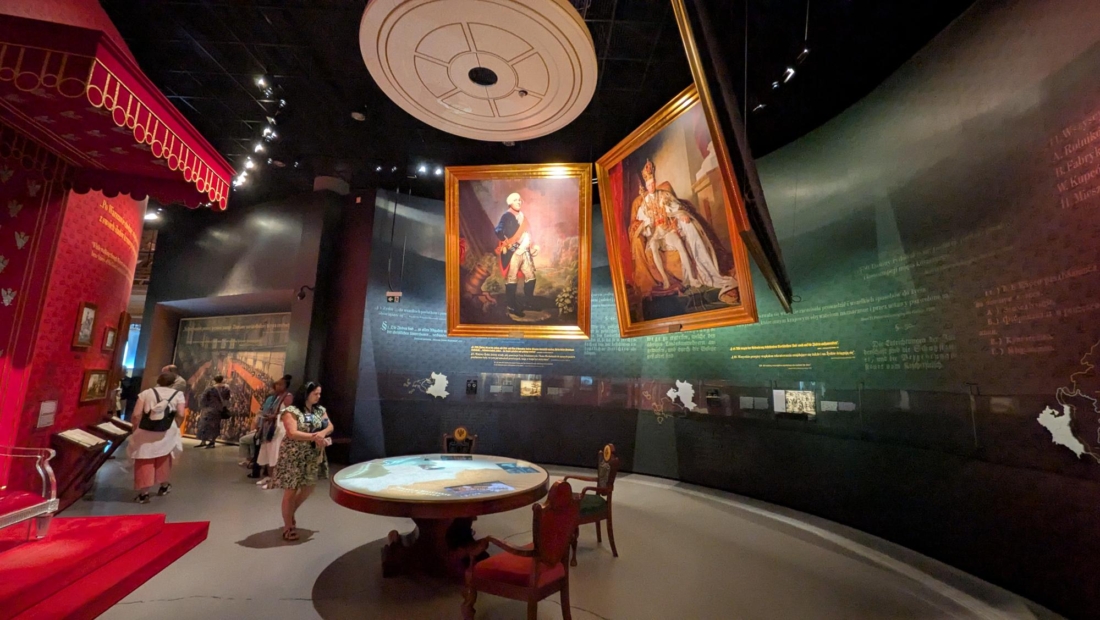
This delicate equilibrium of coexistence collapsed at the end of the eighteenth century. Through a series of three geopolitical maneuvers in 1772, 1793, and 1795, Poland was dissolved entirely, its territory carved up and partitioned between the empires of Prussia, Russia, and Austria. Overnight, the legal protections of the old Polish kingdom vanished. Under Tsarist Russian rule, where the vast majority of Polish Jews suddenly found themselves, autonomy was dismantled, and populations were restricted to the Pale of Settlement. In this era, state-sanctioned antisemitism escalated dramatically, culminating in the violent pogroms of the late nineteenth and early twentieth centuries.
As the ruling empires attempted to consolidate control over a fractured region, Jewish communities faced intense, unrelenting pressure to forcibly assimilate into changing imperial cultures, systematically stripping away the rights they had enjoyed for half a millennium.
Again, I promise the context is important…
Framing the Light Before the Night
By the time a visitor reaches the dark, claustrophobic galleries detailing the German occupation of 1939–1945 and the horrors of the Holocaust, the POLIN Museum has achieved something vital: it has humanized the statistics. As a teacher, this completely shifts the lens through which I read Night. If we only show students the ash and the wire, we inadvertently finish the work of the perpetrators by erasing the identity of the victims. POLIN insists on showing the dynamic world that was lost, the bustling Yiddish theaters of the 1920s, the fierce political debates of the early 1930s, the printing presses, the art, and the schools. Which brings me to my final point and impressions of my experience at the museum.
The Holocaust heavily influences the museum’s narrative, but it does so by acting as a profound historical shadow rather than the sole focal point. We see that the tragedy is not just that millions of people died, but that a vibrant, thousand-year-old civilization was systematically uprooted. Returning to my classroom in Sarasota, I am no longer just teaching a memoir of survival; I am bringing back the echo of a profound, thousand-year-old story of a people who heard a bird call out in the forest and decided to stay.