By: Dalashay Williams
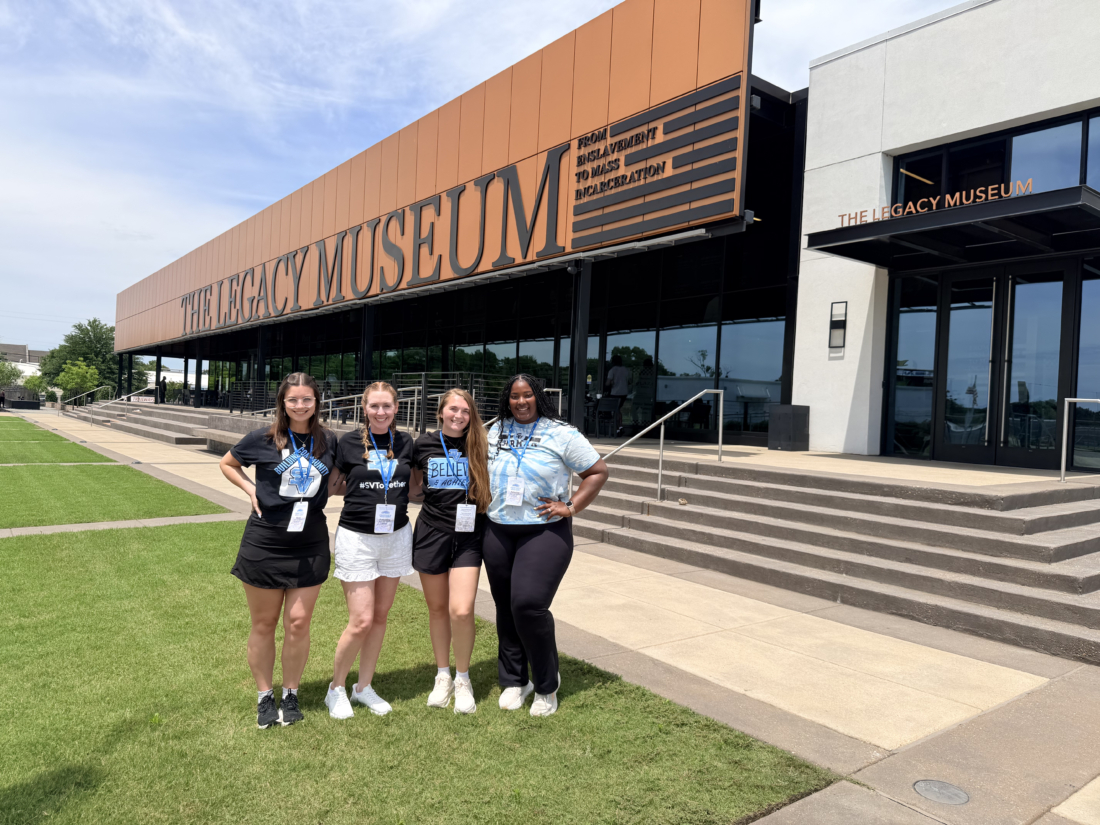
Today, as part of the Marching Down Freedom’s Road Seminar with Classrooms Without Borders, I walked through The Legacy Museum in Montgomery. I expected to learn history, but what I did not expect was to see pieces of my own life reflected throughout the exhibits.
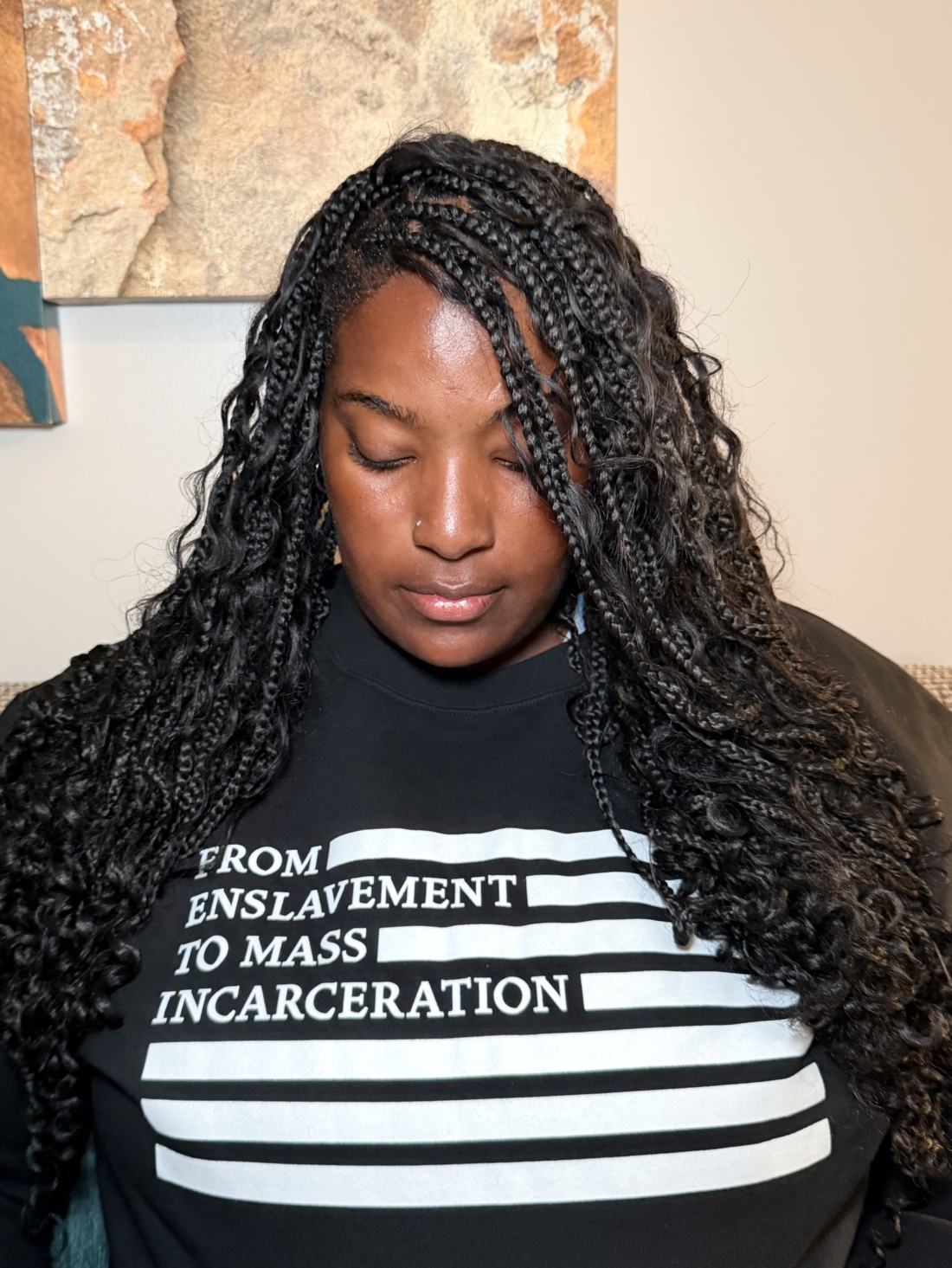
Many discussions of mass incarceration are related to numbers and statistics. For me, these always have names and faces. When I was just three years old, my biological father was sentenced to thirty years in prison. He still has four years left in his sentencing. Two of my three older brothers are also currently incarcerated. As I have grown up, incarceration has not been just an abstract issue, it has shaped a lot of my worldview and my understanding of loss and resilience.
Before visiting the Legacy Museum, I understood mass incarceration as a current issue, but I had never fully considered how deeply it is connected to America’s history. The museum did an excellent job showing how systems of racial oppression did not simply appear after slavery ended, they evolved over time through Jim Crow laws, racial terror, unequal treatment under the law, and policies that have disproportionately affected Black communities. Rather than viewing these events as separate chapters in history, I began to see them as a continuous struggle for freedom and equality. The museum challenged me to think critically about how the past continues to shape the present and reminded me that understanding history is essential to press forward and change the future.
As I reflected on the exhibits, I couldn’t help but think about my own classroom. As a second-grade teacher, I see the children at the very beginning of their educational journey, and I am quickly reminded that the experiences that they have in school matter. The Legacy Museum challenged me to think about the school-to-prison pipeline and how exclusionary discipline can have lasting effects on students. Research has consistently shown that black students are suspended and expelled at disproportionately higher rates than their peers, often beginning in the earliest grades. When students are repeatedly removed from the classroom they lose valuable instruction time and may begin to see school as a place where they are punished rather than supported.
This experience reaffirmed my belief that every child deserves to be seen beyond a single behavior or difficult moment. As educators we have the opportunity to build relationships, extend grace, and create classrooms where students feel safe, valued and capable of success. Although teachers cannot solve every systemic issue, we can choose to create learning environments that foster belonging and inclusion. For me this work is one small but meaningful way to help interrupt the cycles that have affected far too many children and families.
The Legacy Museum reminded me that history is not distant; it lives in families, communities and classrooms. Understanding that truth challenges me to teach with empathy, advocate with courage and ensure that every child feels valued and worthy of hope.