by Haley Landolina
As a participant in an experience like Marching Down Freedom’s Road, it’s easy to feel inundated with information. Each day is packed with experiences that can’t be replicated: walking through numerous museums, standing in the exact places Civil Rights leaders stood, visiting memorials and gravesites, contemplating heartbreaking art and personal testimonies. As a result, I sometimes find myself furiously trying to write it all down, photograph it all, and absorb it fully, fearing it’ll leak out of my brain before I can document it.
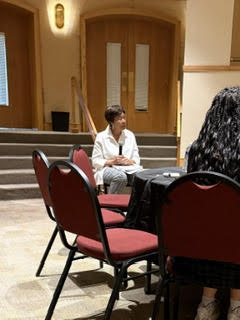
For my blog post, I decided to take a page out of our resident scholar Sam Black’s book. He mentioned before we entered the Legacy Museum that the best museums don’t bite off more than they can chew; rather, they take something specific (whether it be a moment in time, an event, a perspective, or a narrative) and convey it excellently. That’s what I’d like to do with my blog post, so I’m going to share the wisdom bestowed on us by Rev. Carolyn McKinstry today.
At so many of the sites we have visited, I have felt overwhelmed when considering the tenets of nonviolence and the philosophy behind it. The strength it must have taken to withstand the utmost horror, pain, and evil treatment, and to simply take it without retaliation, is moving in a way I struggle to put words to. It’s so much easier to push back, whether physically or with words. It’s so much easier to succumb to the immense emotions experiences like that must unearth.
As we have been walking through this history, I’ve been contemplating it in modern contexts as well. At a time when there is so much hate and division, it can feel difficult to see the similarities between all of us that unite us as humans. It can feel easier to draw conclusions about one another without taking the time to get to know each other. When Rev. Carolyn McKinstry spoke to us today, she made a point of emphasizing the importance of love and reconciliation. She was clear that the way forward to a place of empathy and understanding, the way to unite with those similar to us and also with those different, whether in beliefs, identity, social status, religion, or anything else, is through this love and reconciliation.
The lasting feeling I’m left with today after listening to Rev. McKinstry, who marched with her peers in Birmingham, lost four of her friends in the 16th Street Baptist Church Bombing, who was a fourteen-year-old girl who experienced that terror and spent the next twenty years, in her words, as that fourteen-year-old girl, is that we owe it to ourselves as humans on this earth to take the time to get to know our neighbors, to try to understand them, and to reach out to them and treat them the way we want to be treated. Martin Luther King, Jr.’s famous quote about hate’s inability to drive out hate comes to mind: only love can do that.
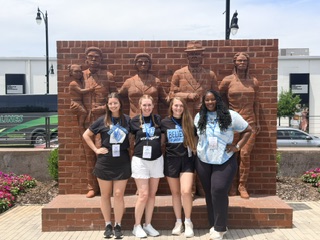
This seminar has really illustrated that. I am so grateful to be a part of this group of educators making that effort each day to know and support one another.