
by Samantha Stewart
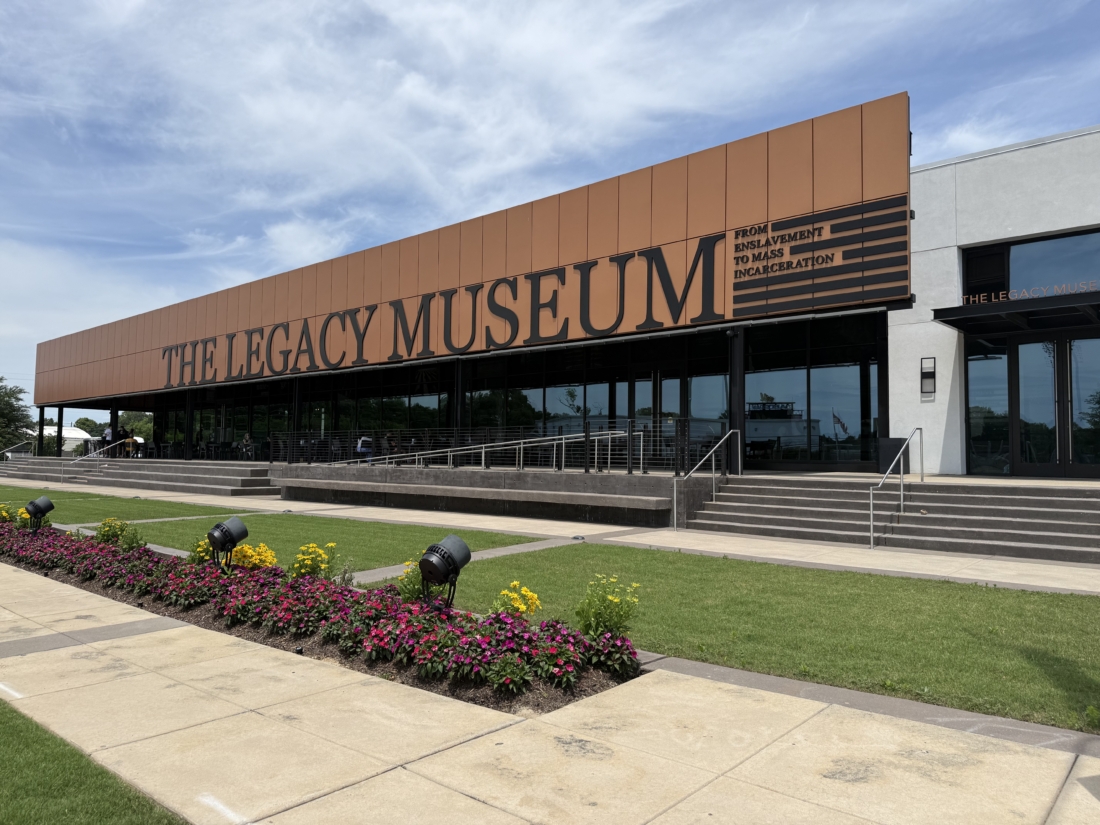
Within the first few steps of entering The Legacy Museum, visitors are emotionally drawn into the narrative of the enslavement to incarceration legacy. There, on the floor-to-ceiling screen is the moving image and sounds of roaring, violent Atlantic Ocean waves beneath an ominous sky so convincing that my body did not comprehend that I was not physically in danger here. I focused on the red words as they appeared on the harrowing screen, informing us of the twelve million people kidnapped and sold as well as the two million whose grave is at the bottom of that transatlantic path. I swiftly moved from the exhibit into the sculptural installment by Kwame Akoto-Banfo honoring those two million people, and in the darkness of the room and horror of this reality my tears fell, wetting the collar of my shirt— a precursor to each space leaving an imprint of history that absorbed into my heart. In the Slavery Evolved room, as an example (the first place of silence, text, and only still images), I could still hear the heart-wrenching cries of “Mama? Mama?” from an enslaved, caged Black boy from the Domestic Slave Trade immersive exhibit, and ahead the sound of chains echoed from the Enslavement in America exhibit. (And those bars and chains? they showed up again and again—as nooses, segregation signs, and most notably as the glass wall between me and the prisoners sharing their stories of injustice in the Mass Incarceration experience.) Even as one steps forward into a new museum space, they are tethered to—or at least reminded of—the previous exhibits.
At the conclusion of the Legacy Museum, its purpose is inscribed on the wall: in part, for children to “overcome the burden of this legacy…” How do we overcome this legacy? As I heard from speakers in multiple films throughout the museum’s theaters, it seems the only way forward is by walking through the memory of the past. As artist Akoto-Bamfo stated, “the story of slavery is being washed away,” and through his sculptures he seeks to maintain the truth of slavery. Exiting the museum hours later, I understood the tempestuous waves in the first exhibit as representing the danger of this history being washed away.
A clear through-line ran the length and space of the museum, in its selected images, statistics, quotations, art, film, and words: “Slavery was justified by an elaborate narrative about the inferiority of Black people, a narrative which survived the formal abolition of slavery in 1865.” What we are taught in schools as ‘history’ (in the past) is actually the continued, present legacy of our country and its people. The memory of slavery, terrorization, segregation, and incarceration of Black people must be acknowledged so that false narrative is fully washed away in those dangerous waves.
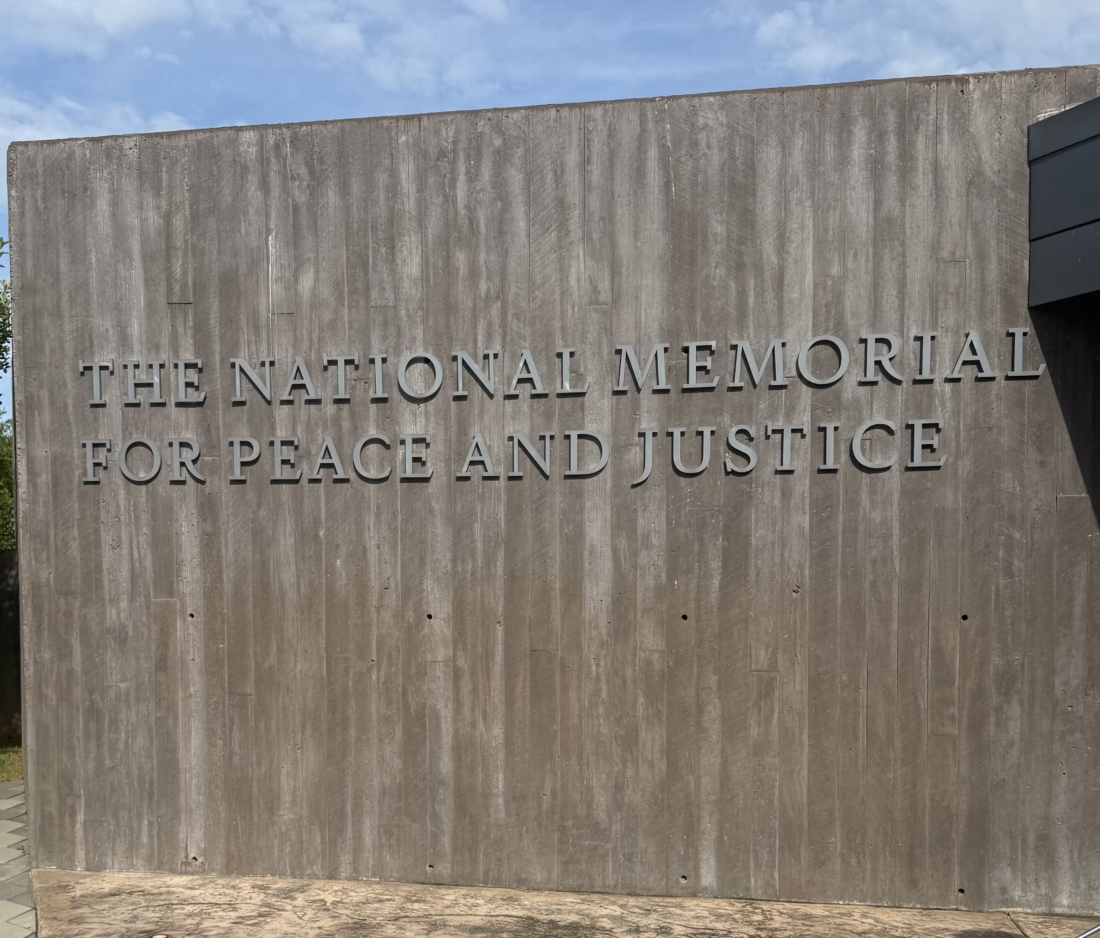
Later in the day, we visited the National Memorial for Peace and Justice. As we walked through the markers for each county in which at least one documented lynching took place, I considered the difference between memorial and memory. As a society, we seem okay with memorial: occasionally honoring those deceased and laying to rest the past. But memory? Memory demands more from us: to sometimes face a difficult, uncomfortable history that has shaped who we are. According to Merriam-Webster, memory is the cognitive “power or process of reproducing or recalling what has been learned.” By this definition, memory is not a thing but an action—and without the act of learning, there is no opportunity for memory.
Having personally experienced this museum and memorial, I am now a witness responsible for educating my students so that they may learn the truth, participate in memory, and pursue justice. “The only way forward is through.”