George Floyd and I shared a last name, but my parents never had to sit down with me to explain how to respond if approached by an officer.
George Floyd and I shared a last name, but no one batted an eye at my brother and me when we cut through yards and went on night walks as kids during the summer.
George Floyd and I shared a last name, but I can’t help but be struck with the reality that if this had been my brother or my dad, things would’ve ended differently. There wouldn’t have been a Justice for Floyd campaign, petitions, or protests in the streets. Simply put, this doesn’t happen to people who look like me.
As a white person, it would be easy for me to use my own position of privilege as an excuse for inaction. To prioritize my own sense of comfort and convenience over taking a stand for what is right. However, as Dr. King wrote in his Letter from Birmingham Jail, “Injustice anywhere is a threat to justice everywhere…Whatever affects one directly, affects all indirectly.” In other words, if it’s a problem for one, it’s my problem too. This trip has solidified my belief that silence is not an option, we all have a responsibility to speak up when we see injustice.
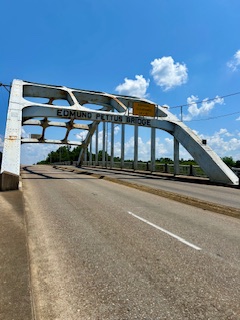
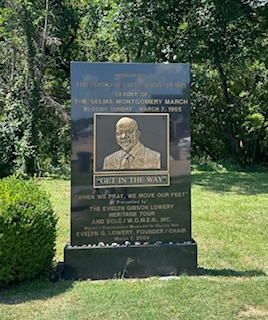
On Friday, we wrapped up our time in Birmingham and in the state of Alabama and are heading to our final stop, Memphis, Tennessee. From tracing the journey from the first enslaved people arriving in the colonies all the way to mass incarceration and the Black Lives Matter movement at the Legacy Museum to hearing firsthand from brave individuals like Dr. Lynda Lowery, Annie Pearl Avery, and Charles Mauldin who all marched across Edmund Pettus Bridge in the face of danger and violent pushback, our time in Alabama has been the learning experience of a lifetime.
I’ll be the first to admit Alabama was not on top of my list of dream destinations – in large part due to the sordid history that brought us here on this trip. However, Alabama offers lessons for us all. Racism isn’t just an Alabama problem or a Southern problem, it is an American problem, a humanity problem. When we relegate racism to something in history textbooks or just in the south, we absolve ourselves of responsibility and also deny reality. Racism still exists. It is in our country’s DNA. It is baked into our systems and institutions. It is in our schools, our hospitals, and our police departments. It is imperative that we acknowledge this history and learn from it.
Alabama also serves as a reminder that there is power in ordinary people joining together to make change. When we think of the Civil Rights Movement, our minds jump to the giants of the movement like Martin Luther King Jr and Rosa Parks. In doing so, we often overlook their humanity. We also forget about the thousands of people who made the Civil Rights Movement a movement: Teenagers like Dr. Lynda Lowery, a self-proclaimed “proud jailbird,” who at fifteen had been arrested nine times for protesting. The Selma teachers who marched to the Dallas County Course and demanded that they be able to register to vote. People like Viola Liuzzo, a white mother of five living in Detroit who was horrified by the images of Bloody Sunday on TV and drove down to Selma to help saying “it was everybody’s fight.” These were regular people like you and me. As Charles Mauldin, a seventeen year old youth organizer in Selma, said, “It was not about me, or John Lewis, or any of our leaders. We wanted to vote, and we just did
what we thought needed to be done to get there.” The Civil Rights Movement was full of ordinary people with a sense of conviction doing what they needed to do.
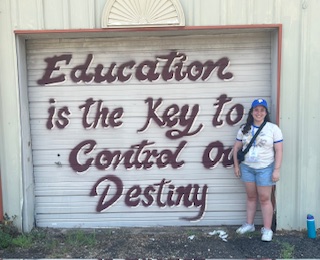
Imagine, what might we achieve if we did the same today? The fight to make “liberty and justice for all” a reality isn’t over. There is work to be done. Let’s get to it.