
Our last day of “Marching Down Freedom’s Road” was spent in the city of Memphis, as we learned about how the Civil Rights movement progressed after the Voting Rights Act in 1965. We began the day at the “I Am a Man” Plaza, which is a public park dedicated to the Memphis Sanitation Strike of 1968. As the sanitation workers of the city of Memphis fought back against years of mistreatment and unfair wages, I was struck at the speed of which the strike drew the attention of Dr. King and other prominent civil rights leaders. After the strike reached its peak on March 28th, Dr. King returned to Memphis on April 3rd to deliver his famous “I’ve been to the mountaintop” speech before his assassination the following day at the Lorraine Motel.
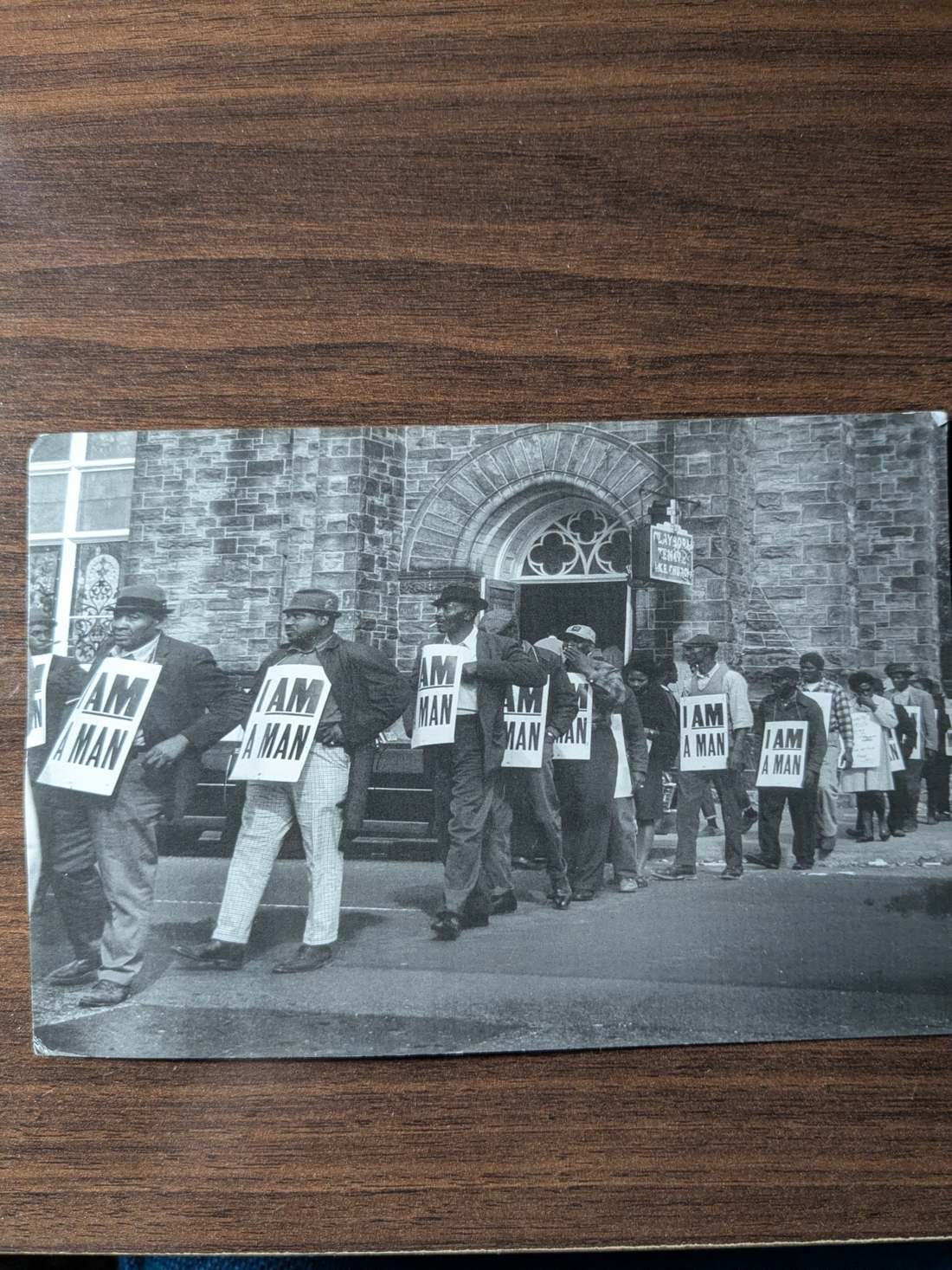
Before my participation in the “Marching Down Freedom’s Road” trip, I was confused about how quickly and intensely the Memphis Sanitation Strike mobilized the SCLC and NAACP in 1968 in Memphis. After learning from key figures in Selma, Montgomery, and Birmingham about their political and social protests I found myself asking the questions: why Memphis? Why a Sanitation Workers’ Strike? As we visited the National Civil Rights Museum and discussed Dr. King’s final moments with our cohort, I found an answer to my question: economic justice stands right next to political justice. There’s no doubt that the right to vote is crucial, but surely so is the ability of a person to work with dignity and receive fair wages. These Memphis Sanitation Workers drew attention to the fact that without stable income and meaningful work, there can be no justice and equality in our economic system for African Americans after segregation. After all, how can one feel secure participating in a democracy if they lack the economic dignity that should be afforded to them from work? I find that Dr. King’s work when it comes to labor rights and income inequality is an often-forgotten part of his legacy but after my trip to Memphis, I am convinced that these principles stand in alignment with suffrage and desegregation. As such, they should be recognized as we redouble our efforts to create economic justice in our society today.